Recap | Academic Conference: "Shaping the Sandbox Framework for the Vietnam International Financial Centre – Ho Chi Minh City (VIFC-HCMC)"
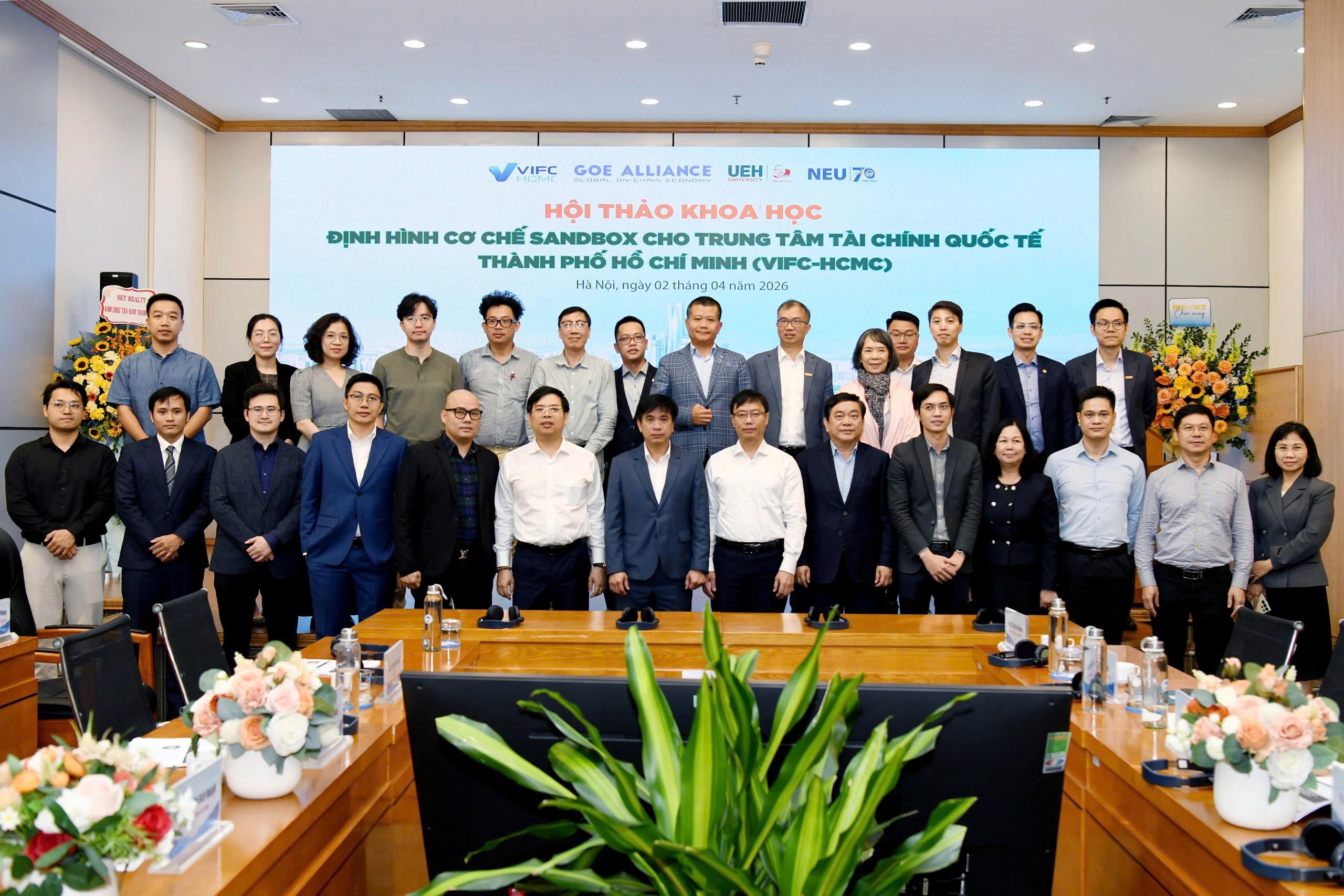
Event Overview
On the morning of 2 April 2026, the Scientific Workshop on "Shaping the Sandbox Framework for VIFC-HCMC" was held at the National Economics University (NEU) in Hanoi. The event was co-organised by four institutions: NEU, the University of Economics Ho Chi Minh City (UEH), Vietnam International Financial Center in Ho Chi Minh City (VIFC-HCMC), and the Global On-chain Economy Alliance (GOE Alliance) — which served as the event's sponsor and international expert connector.
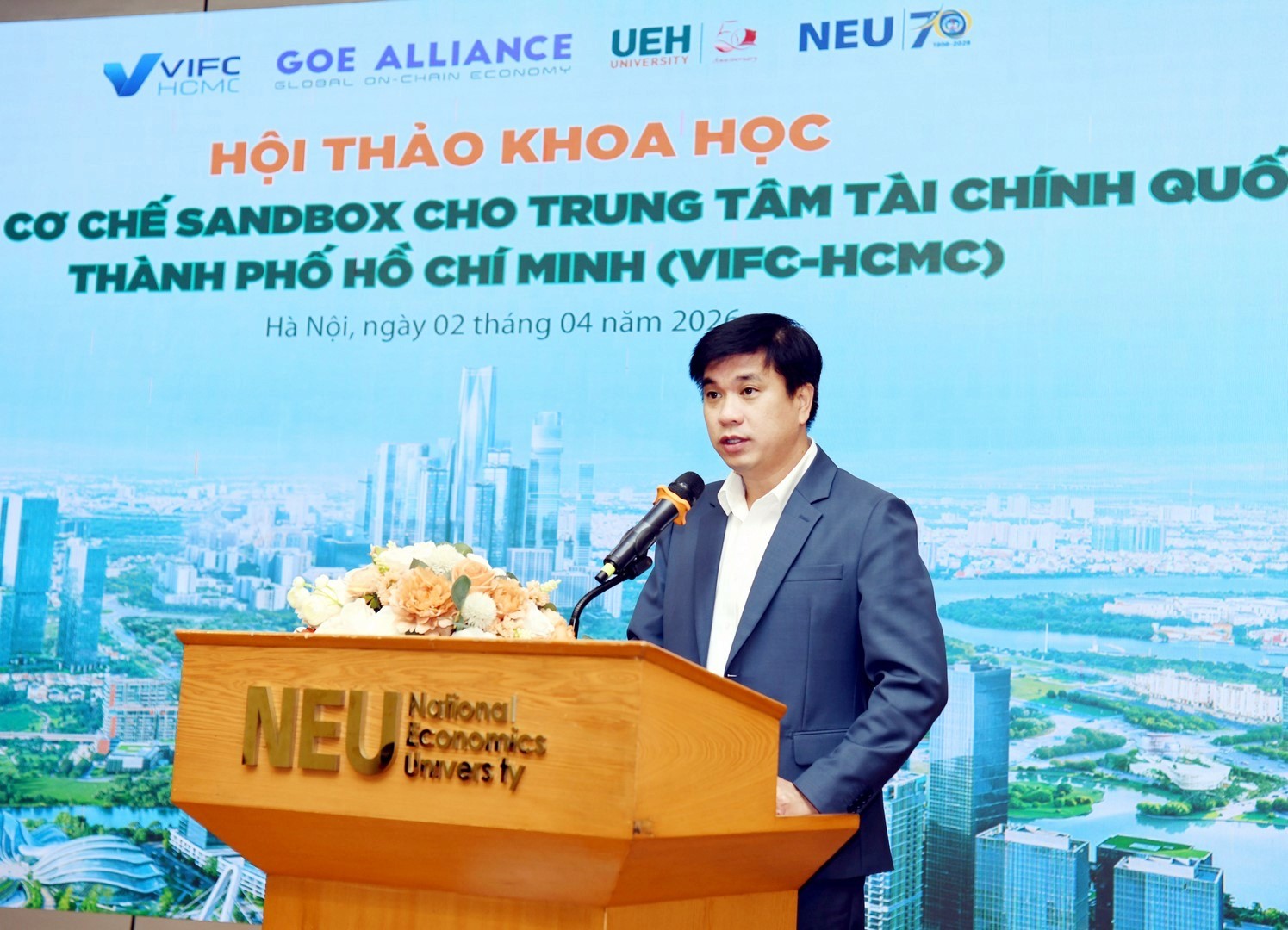
Assoc. Prof. Bui Quang Hung, Acting Vice President of UEH, speaking at the event
The workshop brought together academics, policy experts, regulators, and industry representatives. Academic leadership in attendance included Assoc. Prof. Bui Huy Nhuong (President, NEU), Prof. Tran Tho Dat (Chairman, NEU Science & Training Council), Assoc. Prof. Bui Quang Hung (Acting Vice President, UEH), Assoc. Prof. Pham Tien Dat (Rector, University of Finance – Marketing), and Prof. Nguyen Quoc Suu (Vice Director, Academy of Public Administration and Governance). VIFC-HCMC was represented by Assoc. Prof. Nguyen Huu Huan, Vice Chairman of the Executive Authority. GOE Alliance was represented by Mr. Nguyen Huu Vu Khoa, Secretary-General, and PhD. Tony Tran, Executive Board Member and Director of On-chain Economy Research.
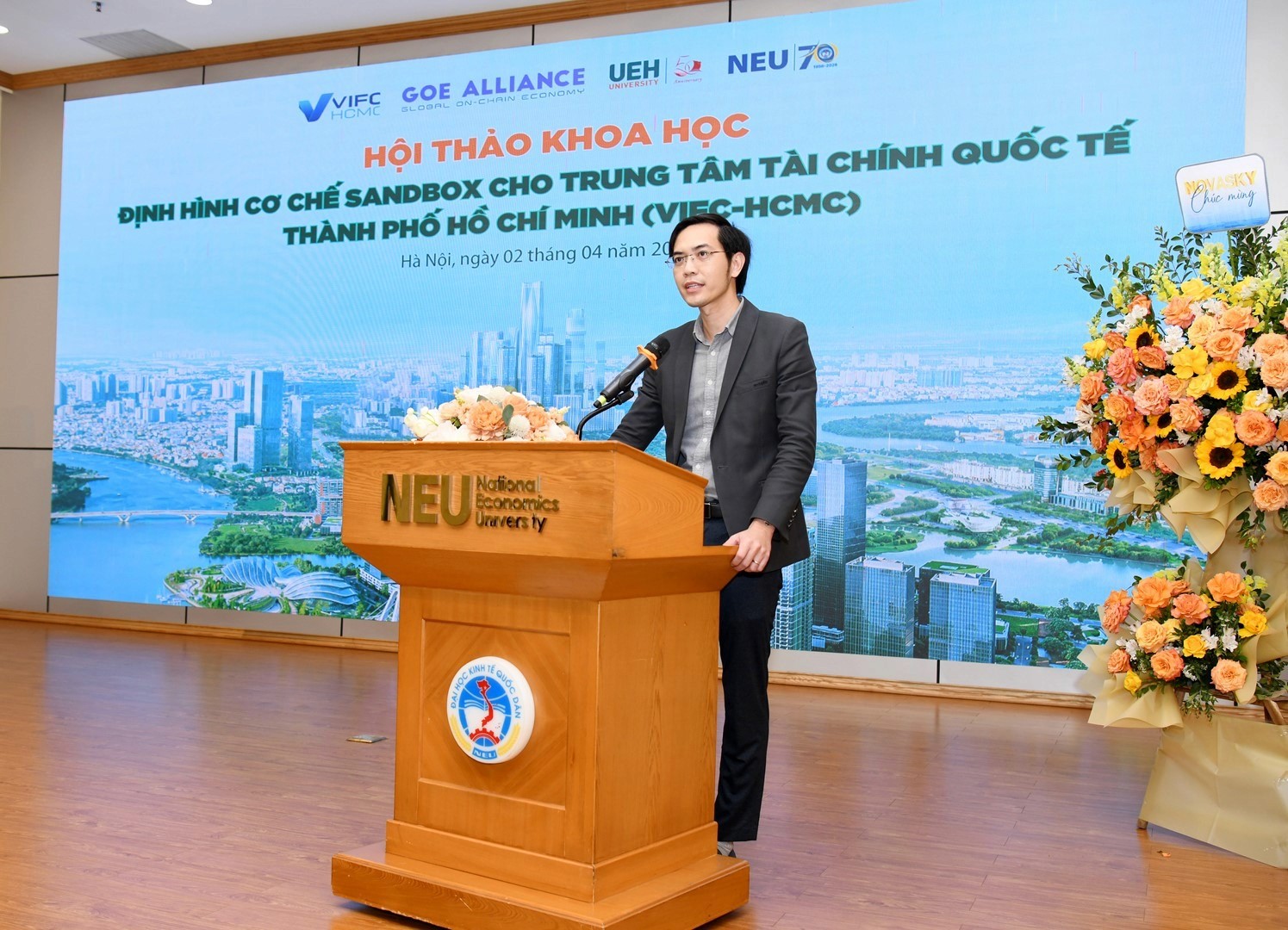
Assoc. Prof. Nguyen Huu Huan, Vice Chairman of VIFC-HCMC, speaking at the event
The workshop's core objectives were to collect scientific and practical evidence for developing the controlled testing mechanism (sandbox) for blockchain and digital assets at VIFC-HCMC; to draw on international experience from leading financial centres including Singapore, Dubai, Hong Kong, and the UK; and to provide UEH's research team with direct expert feedback to refine their sandbox policy advisory report.
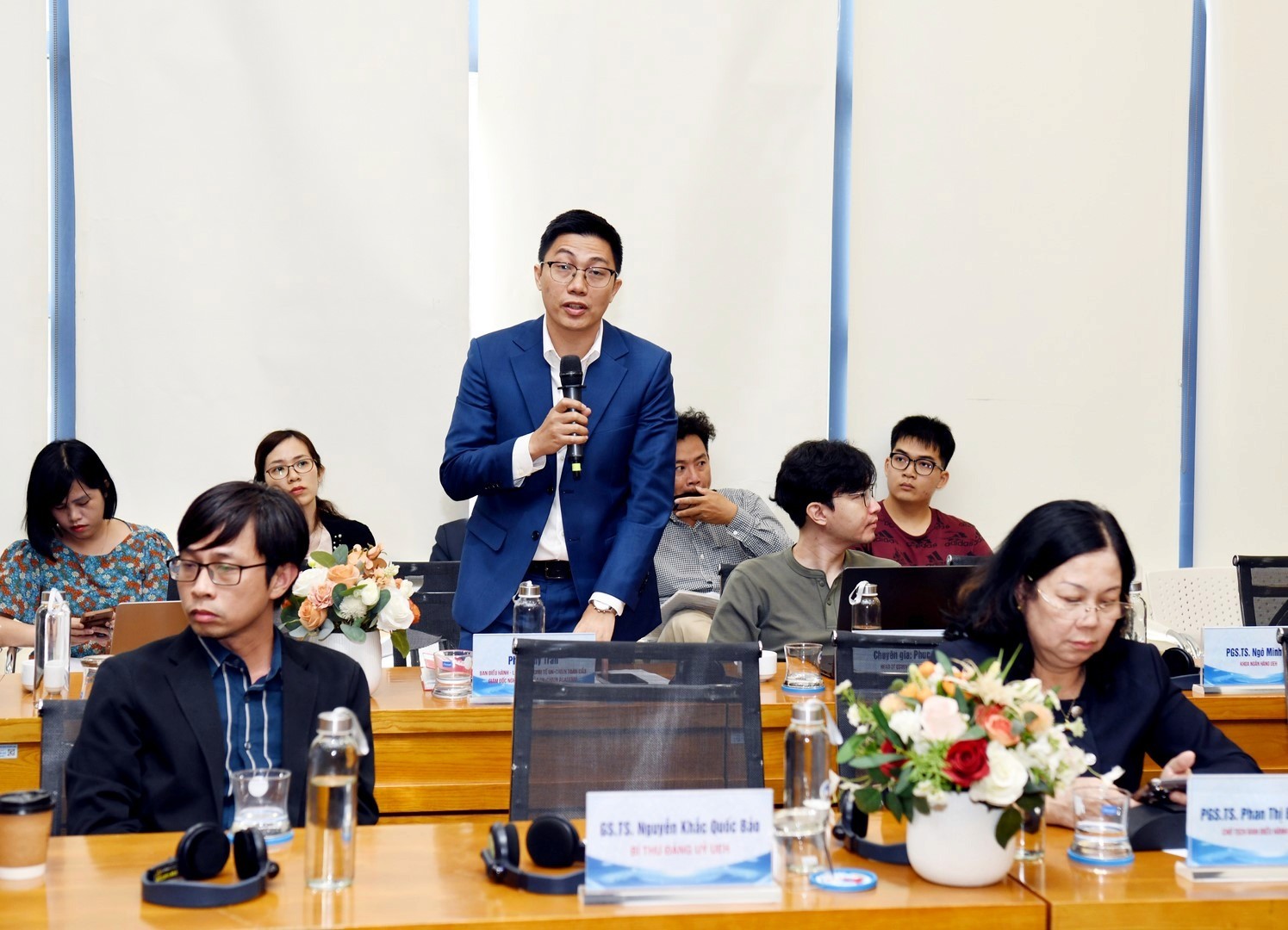
PhD. Tony Tran, Executive Board Member – Director of On-chain Economy Research, speaking at the event
Perspectives from International Experts
GOE Alliance đã mời một số chuyên gia quốc tế có kinh nghiệm thực tiễn trực tiếp tham vấn và đóng góp ý kiến cho báo cáo của UEH. Dưới đây là những nội dung chính:
GOE Alliance invited a number of international experts with hands-on experience to advise on and provide inputs to the UEH report. Key contributions were as follows:
Chan Wei Jie – Head of TOTM Labs
Mr. Chan highlighted two foundational issues for sandbox success. First, banking system readiness: banks play a central role in the VIFC-HCMC sandbox ecosystem, yet upgrading their internal processes, technology infrastructure, and risk governance is far from straightforward — particularly given Basel 3 crypto risk-weighting requirements, which take considerable time and resources to implement due to institutional scale and structure. Delays in bank readiness would directly undermine the sandbox's effectiveness.
Second, he stressed the need for a whole-of-ecosystem approach: sandbox design cannot stop at the regulatory framework. It must also encompass grant support, market access, and distribution partnerships for participants. Startups tend to engage more readily than large corporations, and without this holistic support, innovative solutions are unlikely to achieve commercial success or deliver on VIFC's economic and job-creation objectives.
Mark Aruliah – Head of EMEA Policy and Regulatory Affairs, Elliptic
Mr. Aruliah welcomed VIFC's initiative and drew on his experience working with regulators globally. He noted the market's strong momentum toward tokenisation of commodities (particularly gold), money market funds (MMFs), and tokenised deposits. On blockchain analytics, he highlighted two key dimensions: transparency on private blockchains, and visualisation of financial crime risk. His most notable recommendation was that regulators, not just sandbox participants, should actively deploy blockchain analytics tools from the outset — citing direct engagements with the HKSFC and HKMA on using Elliptic not only for financial crime risk assessment but also for fit-and-proper assessments and evaluation of firms' internal control systems. He placed particular emphasis on proactive supervisory oversight of sandbox members.
Ankita Dhawan – Founder & Policy Strategist, Consilium Advisors
Ms. Dhawan commended UEH's framing of the sandbox as a "policy laboratory" and structured her input around three interdependent pillars: Regulation, Iteration, and Ecosystem. She assessed the report as handling the Regulation pillar well, but requiring significant development on the other two. On Iteration, the report lacks KPIs measuring legislative output and clear graduation pathways post-sandbox. On Ecosystem — the most significant gap — she emphasised that a regulatory framework is necessary but not sufficient: Singapore, Dubai, and Hong Kong built their reputations through parallel investment in grants, co-investment schemes, talent visas, and active international recruitment, not regulation alone.
Perspectives from Domestic Experts
Ms. Ly Nguyen – Manager of Asia Pacific Advisory, Tony Blair Institute for Global Change (TBI)
Ms. Ly acknowledged the report's solid foundation but recommended restructuring it along a consistent policy logic — distinguishing clearly between academic research and implementation design. She proposed a hybrid governance model for VIFC in which the Governing Body handles licensing, the Supervisory Authority handles enforcement, and a Sandbox Committee (embedded within the Governing Body) sets risk standards from the outset — avoiding a multi-ministerial committee structure that risks slowing approvals. She also recommended broadening the sandbox scope beyond blockchain to include SME finance, insurtech, wealthtech, and Agentic AI. Her most critical observation: the report lacks a clear test-to-license pathway with defined KPIs and a transparent mechanism for converting sandbox outcomes into licensing decisions — a prerequisite that international investors and financial institutions will look for before committing to participate.
Mr. Duc Tran – General Partner, IDGX Capital
Mr. Duc Tran offered a practical investment perspective: sandbox deployment must move quickly, as prolonged policy processes erode competitive advantage. He proposed that VIFC-HCMC adopt a socialisation model, enabling private sector participation in building the technology solutions that underpin sandbox policy and broader ecosystem components. He also recommended developing a dedicated sandbox simulation infrastructure for VIFC-HCMC — a mechanism that could significantly compress testing timelines and improve overall sandbox quality.
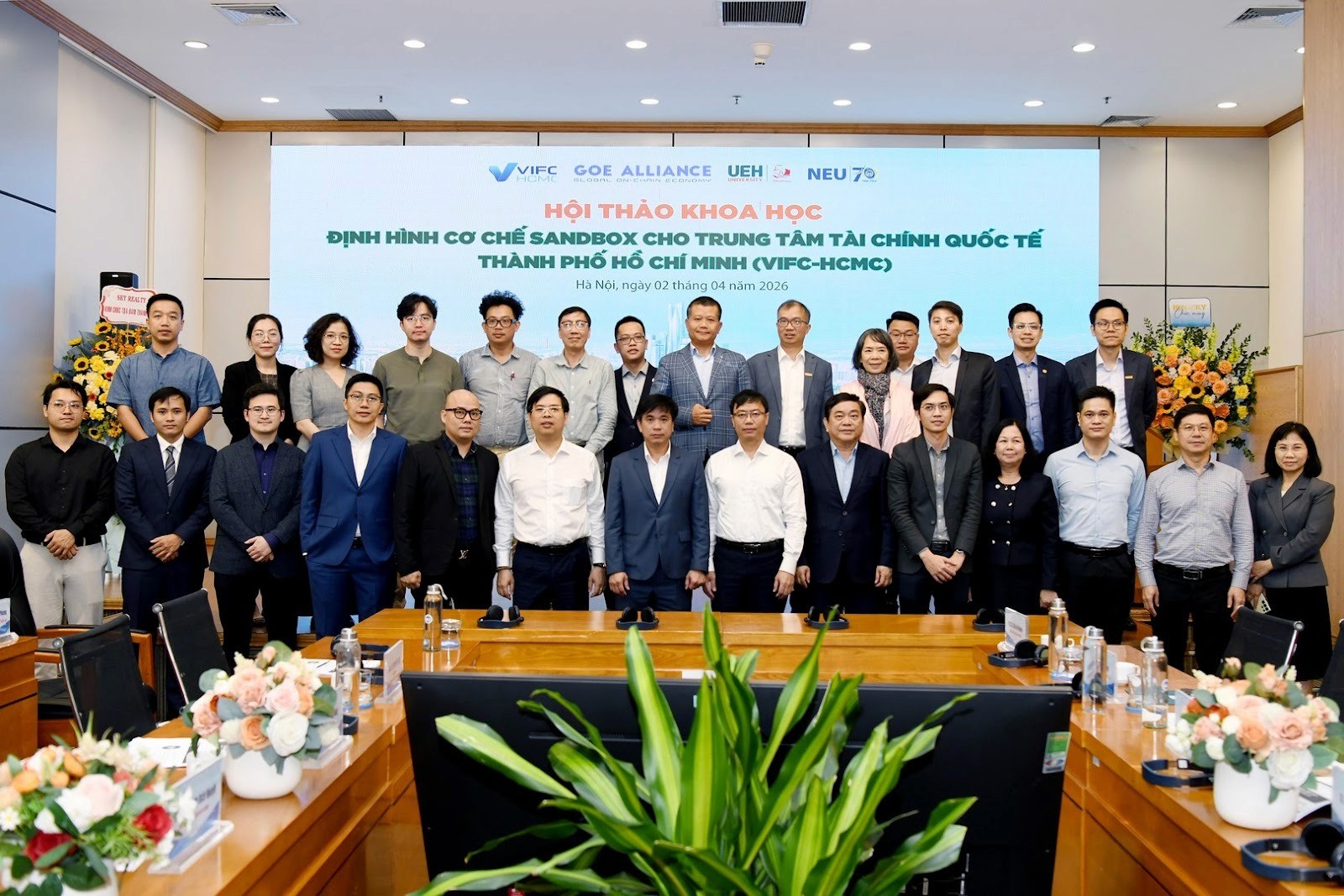
Attendees pose for a group photo at the workshop
Closing Remarks
The workshop concluded with substantive and energetic exchanges across all sessions. Beyond the experts featured above, the event also saw active participation from senior representatives of multiple central government ministries and agencies, who contributed directly to the open discussion sessions with policy guidance and critical feedback. Their presence underscored the institutional commitment to building a credible sandbox framework for VIFC-HCMC.
The insights gathered — spanning regulatory design, policy iteration, and ecosystem development — will be incorporated by the UEH research team as they finalise their advisory report. This marks a meaningful step toward establishing a robust, transparent, and internationally competitive sandbox framework: the essential foundation for VIFC-HCMC to become a genuine testbed and commercialisation environment for innovative fintech solutions, and to cement Vietnam's position on the global digital finance map.


