From Strategy to Structure: GOE Alliance Convenes Expert Consultation on Digital Agricultural RWA Market
8 min read
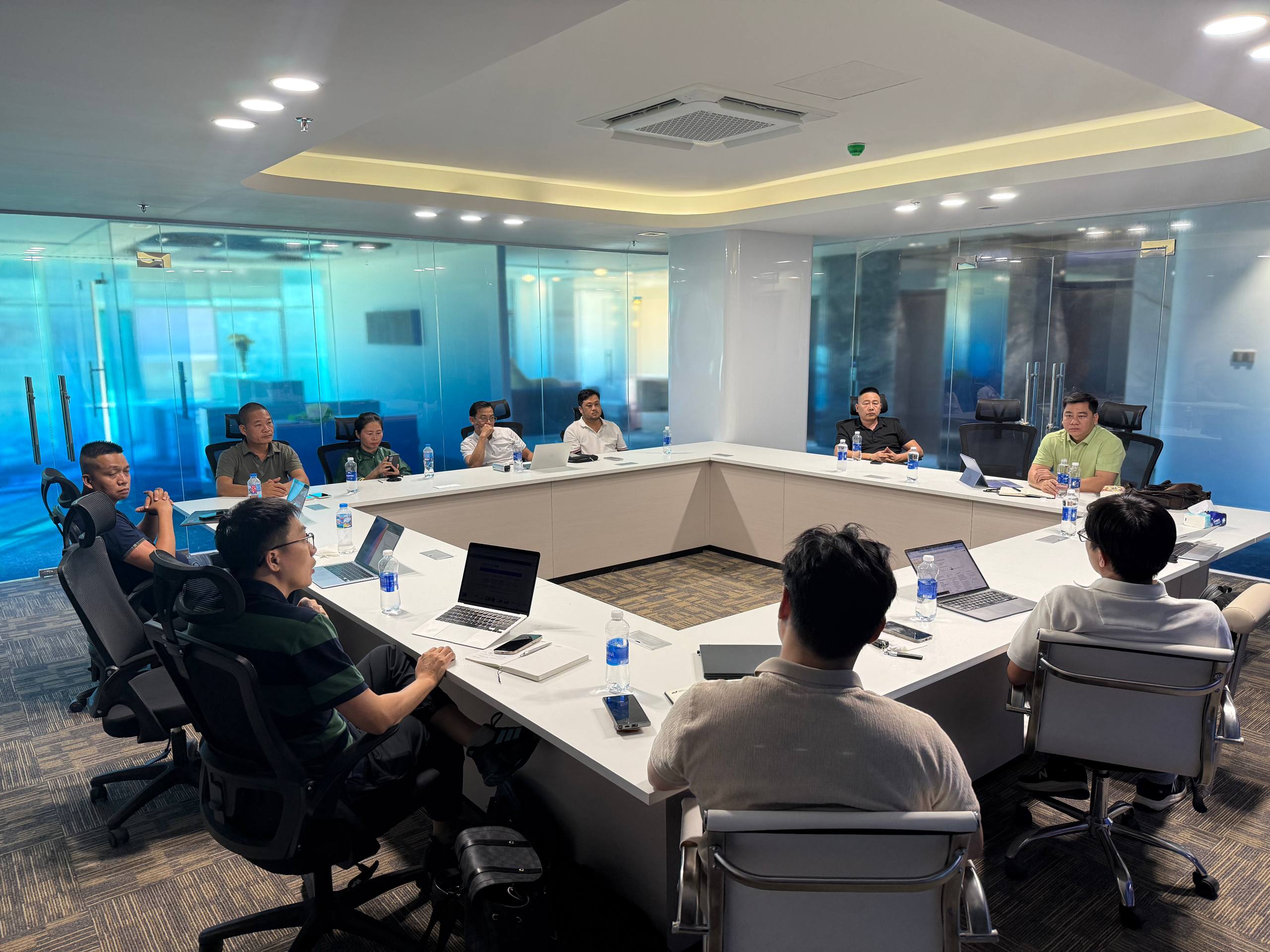
From Strategy to Structure: GOE Alliance Convenes Expert Consultation on Digital Agricultural RWA Market
28 February 2026 | Level 3, GOE Alliance Office, VIFC-HCMC Building | Ho Chi Minh City
On 28 February 2026, at the GOE Alliance office within the VIFC-HCMC Building, a closed-door consultation meeting was convened to accelerate the formation of a Digital Agricultural Asset Trading Center (RWA) aligned with Vietnam’s national growth strategy.
This working session took place shortly after GOE Alliance formally became a strategic member of VIFC-HCMC, marking a transition from institutional alignment to immediate execution. Rather than positioning the RWA initiative as a conceptual innovation, the focus was structural: building a regulated, scalable market layer capable of integrating agricultural production into modern capital markets.
Strategic Context: From Policy Alignment to Market Architecture
Vietnam has entered a new development phase. The operationalization of VIFC-HCMC and the recognition of blockchain and digital asset sandboxes within national strategy signal a structural modernization of financial infrastructure.
The RWA initiative sits precisely at the intersection of:
Capital market modernization
Agricultural value-chain restructuring
Foreign capital mobilization
Institutional-grade digital asset infrastructure
The strategic equation guiding the initiative remains clear:
Financial Infrastructure + Regulated RWA Layer + Foreign Capital = Growth Acceleration
The blueprint guiding this effort defines a phased approach — from alignment and MVP confirmation, to operational proof through real transactions, and ultimately institutional recognition at scale.
The consultation meeting on 28 February was part of Phase 0: ensuring that structural design is grounded in real-sector realities before volume scaling begins.
Expert Delegation: Grounding Market Design in Production Reality
GOE Alliance invited a focused delegation representing financial structuring, export dynamics, and primary production:
Mr. Nhan – Financial Expert
Mr. Long – Import–Export Specialist (Asia markets)
Ms. Diem – Export Specialist (Europe markets)
Mr. Luc Hoa – Organic rice cultivator and coordinator of raw material zones in the Mekong Delta
The purpose was deliberate: avoid building an abstract tokenization layer detached from commodity flows.
Key discussion threads included:
Mapping legal ownership structures for agricultural output
Standardization requirements for export-bound commodities
Working capital constraints across the value chain
Trust and verification layers between farmers, aggregators, exporters, and capital providers
The feasibility of structuring organic rice and other agricultural assets into compliant RWA instruments
The outcome was a structural clarification.
GOE Alliance’s Role: Trust Architecture and Institutional Translation
The RWA blueprint explicitly defines GOE Alliance as a compliance-first coordination layer, reducing fragmentation and translating local opportunity into institutional-grade structure.
Within this initiative, GOE Alliance operates across three axes:
1. Trust Architecture Design
Designing a lifecycle model that integrates:
Issuer → Tokenization → Exchange → Custody → Settlement → Secondary Market
This ensures agricultural assets do not merely become tokenized representations, but legally mapped, auditable financial instruments.
2. Market Fragmentation Reduction
Vietnam’s agricultural production is geographically and operationally fragmented. Capital markets require standardization. GOE Alliance’s task is to design interoperability between raw material zones, exporters, and regulated trading infrastructure.
3. Institutional Translation
International LPs and capital allocators require transparency, governance clarity, and risk controls. The Alliance functions as the bridge between on-the-ground production and global capital expectations.
Beyond Volume: Toward Structural Recognition
The broader roadmap envisions a staged trajectory:
Alignment and MVP confirmation
First validated transaction
Institutional recognition of a functioning billion-level market
However, the consultation emphasized a critical principle outlined in the blueprint:
The summit phase is not a launch event. It represents institutional recognition of a functioning market.
This distinction matters. Premature narrative scaling creates speculation risk. Structural sequencing creates credibility.
Why Agriculture, Why Now?
Agriculture remains a foundational pillar of Vietnam’s economy, yet it operates largely outside sophisticated capital market structures. Tokenized real-world assets, when designed under regulated frameworks, offer:
Improved capital velocity
Reduced cost of capital
Transparent ownership mapping
Secondary liquidity potential
Cross-border capital access
The consultation signaled the beginning of a coordinated attempt to embed agricultural assets within modern financial infrastructure — without sacrificing compliance, governance, or export integrity.
The Emerging Picture
GOE Alliance’s strategic membership within VIFC-HCMC is not symbolic. It is operational.
Within weeks of alignment, the Alliance moved into structured consultation with sector experts, linking real production systems to digital financial architecture.
If executed correctly, agricultural RWA will not be a parallel market experiment. It will become a permanent segment within VIFC capital markets — reinforcing Vietnam’s positioning as a structured, compliant RWA hub in ASEAN.
The 28 February consultation represents an early but critical step in that direction: from policy alignment to market structure, from vision to implementation.
The work has begun.


