Exabyte Joins GOE Alliance to Put Vietnam's Agricultural Economy On-Chain
4 minutes
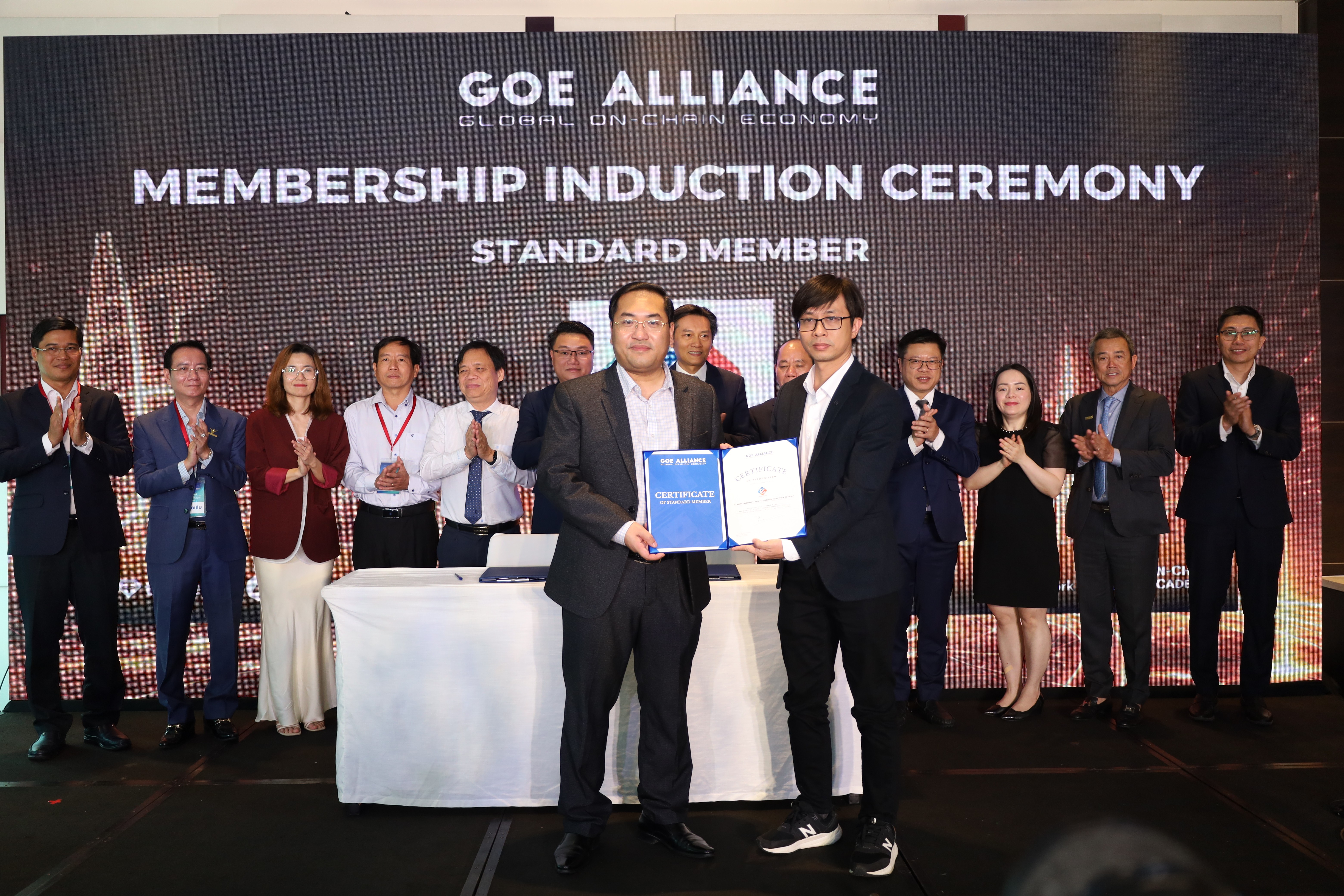
Ho Chi Minh City, March 21, 2026
The Next Growth Engine Has a Harvest Cycle
Vietnam's GDP reached USD 514 billion in 2025, growing 8.02%. The government has set a double-digit growth target for 2026. Reaching it requires new capital rails beyond the manufacturing and export channels that drove growth so far.
Agriculture is the most viable entry point. The sector closed 2025 with USD 70.09 billion in export value, up 12% year-on-year, second in Southeast Asia by volume. The government targets USD 73–74 billion in 2026. Globally, the tokenized RWA market crossed USD 15 billion in 2024 and is projected to exceed USD 30 billion by 2026. Southeast Asia, with its large agricultural base and reform-oriented regulators, ranks among the highest-potential regions for productive-sector on-chain adoption. VIFC-HCMC launched on February 11, 2025 to be exactly that infrastructure: Vietnam's regulated entry point into global capital markets.
Vietnam Leads in Volume, Loses on Price
Vietnam leads the world in cashew exports, ranks second in rice and coffee, third in fruits and vegetables. The prices those volumes generate fall short of what the quality warrants.
The gap comes down to traceability. EU, Japanese, and American buyers pay premiums for goods they can verify. Without proof, Vietnamese produce enters at commodity pricing regardless of quality. Vina T&T Group spends approximately USD 500,000 per year on compliance certification alone. Most cooperatives and smallholders cannot absorb that cost. In 2024, the EU issued 14 warnings against Vietnamese agricultural exports, double the prior year. Since early 2025, 12 more have followed. The EU Deforestation Regulation now requires farm-plot-level traceability for coffee, with auditable geolocation data. Vietnam's agricultural sector remains largely paper-based at the farm level, with digital traceability infrastructure concentrated among large export enterprises rather than the smallholder producers who make up the majority of the supply chain. Without a unified data layer, agricultural assets cannot serve as collateral, cannot be tokenized, and cannot attract the capital that would move producers up the value chain.
The Infrastructure That Changes What a Record Is Worth
On-chain infrastructure solves this at the layer where legacy systems fail: data integrity and portability.
A blockchain records events that no single actor controls and no subsequent actor can alter. For supply chains, that means provenance records and compliance documentation that travel with the product, readable by any credentialed party anywhere. A buyer in Hamburg does not need to trust an intermediary's certification. Trustless settlement removes reliance on institutional good faith. Immutability prevents retroactive changes. Composability connects those records to trading platforms, tokenization protocols, and capital deployment tools without rebuilding integrations each time. Across the EOM region, institutional adoption is moving: Singapore's Project Guardian has run live pilots of tokenized bonds and cross-border settlement; Indonesia and Thailand have issued digital asset regulatory frameworks. Vietnam's National Assembly resolution establishing VIFC-HCMC names digital financial infrastructure as a national strategic priority.
Built From the Ground Up, Authorized From the Top Down
Exabyte Technology and Media Company Limited was founded in September 2022 with a specific mandate: build Vietnam's foundational blockchain infrastructure from the base layer up.
The founding team chose Layer 1 development from the start. That decision is not incidental. Layer 1 ownership means Exabyte controls throughput, fee structure, consensus parameters, and upgrade paths. The company does not inherit another chain's congestion pricing, governance disputes, or deprecation risk. For enterprise infrastructure operating inside a national regulatory framework, that control is the product.
Early engineering priorities reflected the same logic. Exabyte built a system allowing token and NFT transactions without requiring end users to hold native tokens for gas fees, removing one of the most persistent friction points in enterprise blockchain adoption. The company conducted applied research across e-commerce, distribution management, and education before committing agriculture as the primary vertical. By the time AgriChain launched, Exabyte had already built production knowledge in sectors where blockchain integration fails most often: complex multi-party workflows with non-crypto-native users.
AgriChain is Exabyte's flagship product. The Ministry of Agriculture and Environment authorized the platform to record and verify the origin and distribution of agricultural products across Vietnam's supply chain. Every data point, from seed origin and care procedures to harvesting, processing, and transportation, records via QR code, immutable and auditable by any credentialed party. A Vietnamese farmer with an AgriChain certificate stops selling anonymously into a commodity market. Their credential travels with the product and speaks to EUDR compliance requirements, the US Food Safety Modernization Act, and equivalent standards in Japan and Korea.
The Ministry authorization is the competitive position that no competitor can replicate quickly. Exabyte is not building a traceability tool that competes with state systems. It is building the state's system. AgriChain is the designated traceability layer for a government that has made agricultural compliance a 2026 strategic priority, and that has set USD 73–74 billion as this year's export target. That mandate is structural, not commercial.
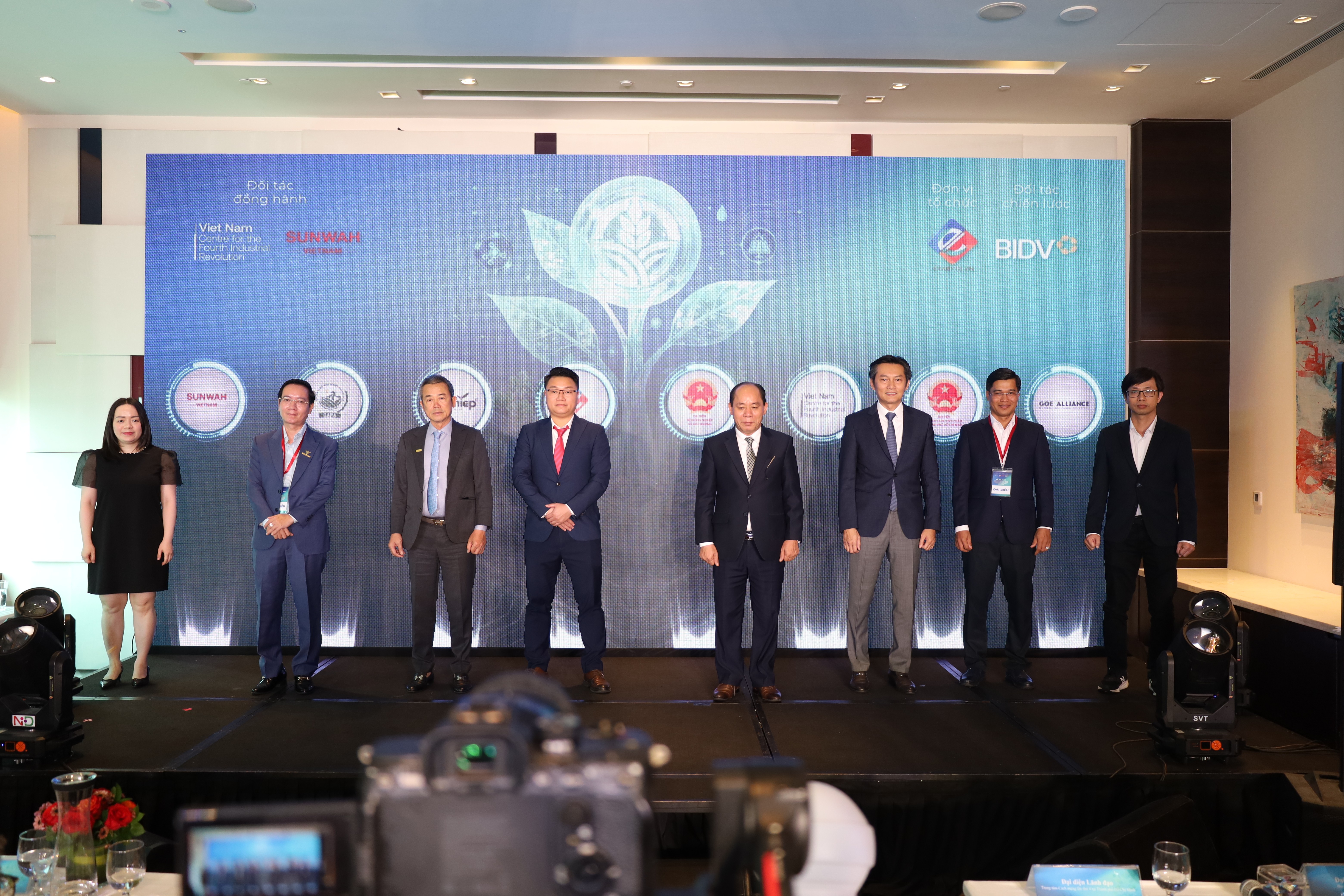
Exabyte launched AgriChain on March 21 at Le Méridien Saigon. The Ministry of Agriculture and Environment, Sunwah Group, and the Centre for the Fourth Industrial Revolution (C4IR) attended. Their presence reflects the institutional backing behind the platform and the breadth of sectors it serves.
Representatives from the Ministry and Exabyte estimate that with AgriChain's infrastructure in place, Vietnam's agricultural export value can surpass USD 100 billion. That ceiling is not a volume target. The gap between current export values and USD 100 billion is priced in trust, and AgriChain is the mechanism that supplies it.

A Record Means Nothing Without a Framework to Back It
A data record on a blockchain carries no financial weight unless regulators, financiers, and investment funds recognize the framework it operates within. Exabyte joining GOE Alliance solves exactly that problem.
GOE Alliance selects members on two criteria: technical credibility and strategic fit within Vietnam's on-chain financial architecture. Exabyte satisfies both. Its Ministry-authorized mandate gives it state-level legitimacy in the sector GOE Alliance has identified as the highest-priority proof of concept for on-chain RWA in Vietnam. Its Layer 1 infrastructure provides the technical foundation for assets that need to be investable at institutional grade.
For Exabyte, GOE Alliance membership converts AgriChain from a useful platform into a recognized component of Vietnam's financial infrastructure. Records generated by AgriChain sit within a framework that VIFC-HCMC and GOE Alliance have established as credible to capital markets counterparties. Farm certificates become legible to investment funds, not just commodity buyers.
GOE Alliance brings Exabyte three things it cannot build independently: network access to institutional capital, regulatory legitimacy through the VIFC-HCMC framework, and connection to the EOM ecosystem across Southeast Asia. These are the conditions under which AgriChain's data becomes a financial instrument.
The connection to GOE Alliance's Asia RWA Trading Hub makes this concrete. The RWA Hub tokenizes real-world assets with institutional-grade compliance, anchored in VIFC-HCMC. It requires verified assets to function. AgriChain produces them. Investors on the RWA Hub gain access to a pipeline of credible, on-chain agricultural assets. Exabyte gains a market of capital looking to deploy into exactly those assets. The MOU signed on March 21 formalizes this pipeline.
Exabyte's contribution to the GOE Alliance ecosystem extends beyond agriculture. Its Layer 1 infrastructure and gasless transaction system feed directly into the On-chain Financial Network (OFN), GOE Alliance's cross-border market infrastructure. OFN operates like a bridge connecting participants across EOM markets: a business or investor that completes KYC once gains access to cross-border transactions across member markets without repeating the process at each border. For that bridge to function, it needs verified, on-chain data at the asset level. AgriChain supplies exactly that. As Vietnam's on-chain economy scales toward 2030, the infrastructure layer needs domestic builders with production-grade systems and state-level mandates. Exabyte is one of a small number of companies in Vietnam that qualifies on both counts.
Verified agricultural assets in Vietnam become investable instruments across the EOMs, routed through VIFC-HCMC's regulated infrastructure, accessible to capital that previously had no credible entry point. Exabyte builds the data layer. GOE Alliance builds the market. Together they close the gap between what Vietnam's agriculture produces and what it earns.


